

Bar One Chocolate in Canada: ingredients, flavour, allergens, and buying tips
If you are deciding whether to buy Bar One Chocolate in Canada, this quick checklist walks you through seven focused checks you can run in under five minutes. Use these steps to confirm authenticity, read the ingredients and Nutrition Facts, predict taste and texture, spot allergy risks, compare landed cost with promotions, and confirm storage and shelf life before you buy. When you are ready to purchase, the Tadkasnacks product page is linked in the final step so you can compare images, ingredient details and available discounts.
How to use this checklist
Move through each step while viewing the product photo or packaging online. Pause at any point where a label or seller detail is missing, and contact the seller for clarification. This checklist is built for Canadian buyers who want clear signals before adding imported Indian chocolate to their cart.
The 7-step checklist

Step 1: Confirm authenticity and the seller
Why it matters: Genuine packaging and a trustworthy seller reduce the risk of counterfeit or stale stock. Quick checks include product title, brand markings and seller details.
- Match product images, logo and bar shape to a trusted listing. Compare photos to the Tadkasnacks Bar One product page to confirm visual consistency: Bar One Chocolate on Tadkasnacks.
- Confirm the product title or SKU mentions the brand and bar name, not only a generic description.
- Check seller transparency, such as a clear business website, contact email, visible promotions and stated shipping rules. A visible returns policy and contact method are positive signs.
- If images look inconsistent or the seller hides brand details, pause and ask for a close-up photo of the ingredient panel or a picture of sealed outer packaging before buying.
Step 2: Do a 30-second ingredient check
Why it matters: Ingredient order tells you whether a bar is cocoa-forward or mostly sugar. In seconds you can tell the bar's orientation by which ingredient appears first and by how many sugar names are listed.
- Find the first ingredient. If "sugar" is first, the bar is likely very sweet. If "cocoa" or "cocoa mass" appears early, you will get more chocolate character. See practical label guidance from chocolate buying resources such as How to Choose Good Chocolate and How to Read a Chocolate Bar Label.
- Scan for multiple names for sugar, for example glucose, invert sugar or dextrose. Multiple sugar names usually mean added sweeteners rather than pure cocoa content.
- Look for a declared cocoa percentage if present. Higher percentages usually mean less relative sugar, although many mass-market bars do not list one.
- Flag long lists of unfamiliar stabilisers or additives. Craft chocolate tends to use very few ingredients, while many additives point to a mass-market recipe.
Step 3: Scan the Nutrition Facts for red flags
Why it matters: The Nutrition Facts panel shows sugar and fat per serving, and it can reveal problematic ingredients such as hydrogenated oils. Use these quick scans to decide whether the bar fits your diet or taste threshold.
- Check total sugars per serving. High sugar per serving confirms a very sweet bar and may inform portion decisions.
- Look for trans fat entries or the words hydrogenated or partially hydrogenated oil in the ingredient list, since those terms signal unhealthy fat types. Guidance on chocolate nutrition is available from resources like Healthline's buyer guide.
- Note serving size. Some bars use small serving sizes to lower the per-serving sugar value, so compare serving weight as well as per-serving numbers.
- Watch saturated fat levels. Chocolate naturally contains saturated fat, but unusually high numbers may indicate added fats rather than cocoa butter alone.
Step 4: Infer taste and texture from ingredients and images
Why it matters: You cannot taste before you buy online, but ingredients and photos give strong clues about flavour, sweetness and mouthfeel. Use ingredient cues such as milk powder, caramel or nougat to predict the eating experience.
- If milk powder, condensed milk or milk solids appear early, expect a creamy, milky bar rather than a dark, bitter bar.
- Ingredients like caramel, sugar syrups or glucose suggest a chewy, sweet filling that defines the bar's character.
- Emulsifiers such as soy lecithin affect mouthfeel but not flavour. Many mass-market bars include them to achieve smoothness at scale.
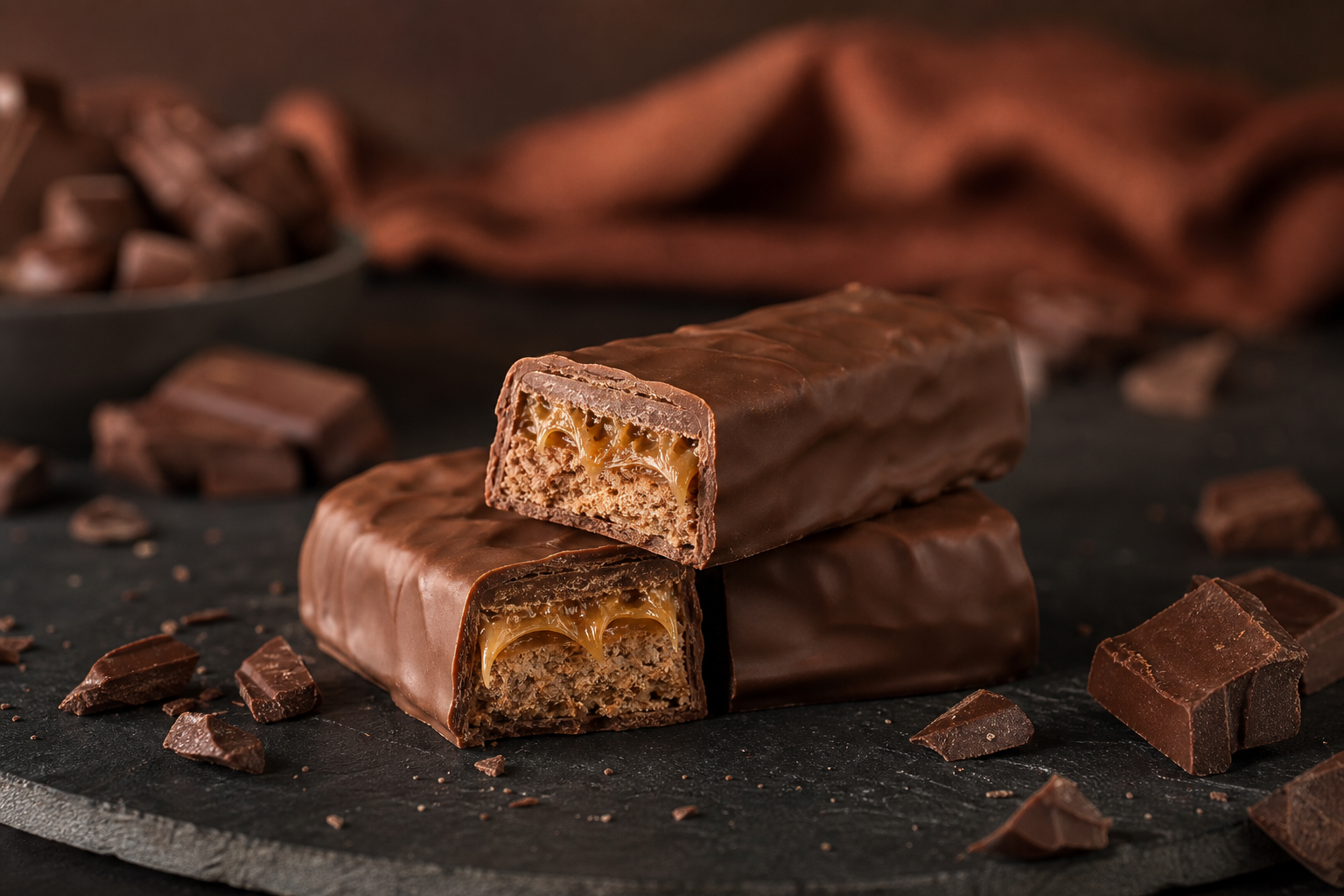
- Compare product photos for cross-section shots and overall bar size to set expectations about portion, filling and chewiness.
- For general tips on how ingredient choices affect flavour and format, consult general chocolate buying advice such as the Food Network guide.
Step 5: Check allergens, dietary warnings and claims
Why it matters: Food allergies and diet restrictions require careful label checking. Always confirm the presence of common allergens and any cross-contamination statements before buying imported confections.
- Search the ingredient list for milk, nuts, peanuts, soy, wheat or gluten. If an allergen is listed, do not buy unless it is safe for the intended eater.
- Look for cross-contamination notes such as "may contain" or "packaged in a facility that also processes" nuts or dairy, since these matter for severe allergies.
- Do not assume dietary claims without explicit certification. If Halal, Kosher or other certification matters to you, request proof from the seller or check the manufacturer.
- If an ingredient panel is missing online, ask the seller for a clear photo of the label or contact the brand. For sugar-free or specialty concerns, read specialist guidance such as the ZoRaw sugar-free guide.
Step 6: Compare price, shipping and Canadian savings signals
Why it matters: The total landed cost can change whether the purchase feels like good value. Compare unit price with shipping, promotions and any first-order discounts to determine final cost per bar.
- Calculate the per-bar price including tax and shipping. Add shipping to the cart and divide total by quantity to see unit cost.
- Apply available promotions. For example, Tadkasnacks offers 15% off first orders and free shipping on purchases over $50, which can reduce the effective unit price for Canadian buyers. Check the seller homepage for current offers: Tadkasnacks.
- Check multi-pack savings. Buying a multipack or several bars may lower unit cost, but consider shelf life before bulk buying.
- Decide on an acceptable price range by comparing with similar Indian bars sold in Canada. Imported specialty items often carry a premium for authenticity and import handling.
Step 7: Check storage, shelf life and make your final buy or pass decision
Why it matters: Chocolate quality depends on storage and time. Confirm best-before or production dates and understand fresh storage rules so you receive a product that tastes as expected.
- Find the best-before or production date on the product page or ask the seller for it. If a date is not visible, request it before buying.
- Store chocolate after delivery in a cool, dry place away from direct sunlight and strong odours. Avoid high humidity to reduce bloom or texture change.
- Use a simple 3-point rubric to decide: buy if authenticity, ingredients and price pass; request more info if any label or seller detail is missing; pass if allergens or suspicious ingredients are present.
- Common buyer objections and short responses: if you worry about authenticity, ask for label photos; if allergic, confirm allergen statements before buying; if price feels high, compare with multi-pack options or wait for a site promotion.
When you are ready to purchase, view the Bar One Chocolate listing on Tadkasnacks to compare images, ingredient details and to apply any available discounts at checkout: Bar One Chocolate on Tadkasnacks.
Frequently asked questions
Is Bar One Chocolate sold in Canada and where can I buy it online
Bar One Chocolate is available through import-focused retailers. You can view the Tadkasnacks product listing for Bar One Chocolate and order directly from their Canadian store for home delivery: Bar One on Tadkasnacks.
How can I tell if the Bar One bar I buy is authentic
Compare the seller's product photos and name with the brand's known packaging, confirm clear seller contact details, and request close-up photos of the sealed outer wrapper and ingredient panel if anything looks off. Buying from an established import seller with transparent product pages reduces the risk of counterfeit stock.
Does Bar One Chocolate contain common allergens like milk or nuts
Many mass-market chocolate bars contain milk and may be produced in facilities that handle tree nuts or peanuts. Always check the ingredient list and any "may contain" or cross-contact warnings on the product page or ask the seller for label photos before purchasing for someone with allergies.
How long does Bar One Chocolate stay fresh and how should I store it
Chocolate shelf life varies by recipe and packaging. Check the best-before date on the product or ask the seller. Store chocolate in a cool, dry place away from heat and strong odours to preserve texture and flavour.
What if the ingredient list on the product photo is missing or unclear when buying online
Contact the seller and request a clear photo of the ingredient and Nutrition Facts panels before purchase. If the seller cannot provide label information, do not buy if you need allergen or ingredient certainty.
Final call to action

If you have completed these seven checks and are ready to buy, view Bar One Chocolate on the Tadkasnacks store to compare images, check the exact ingredient list, and apply any first-order discount or free shipping over $50 at checkout. Shop now at Tadkasnacks or go directly to the product page: Bar One Chocolate on Tadkasnacks.
0 comments