

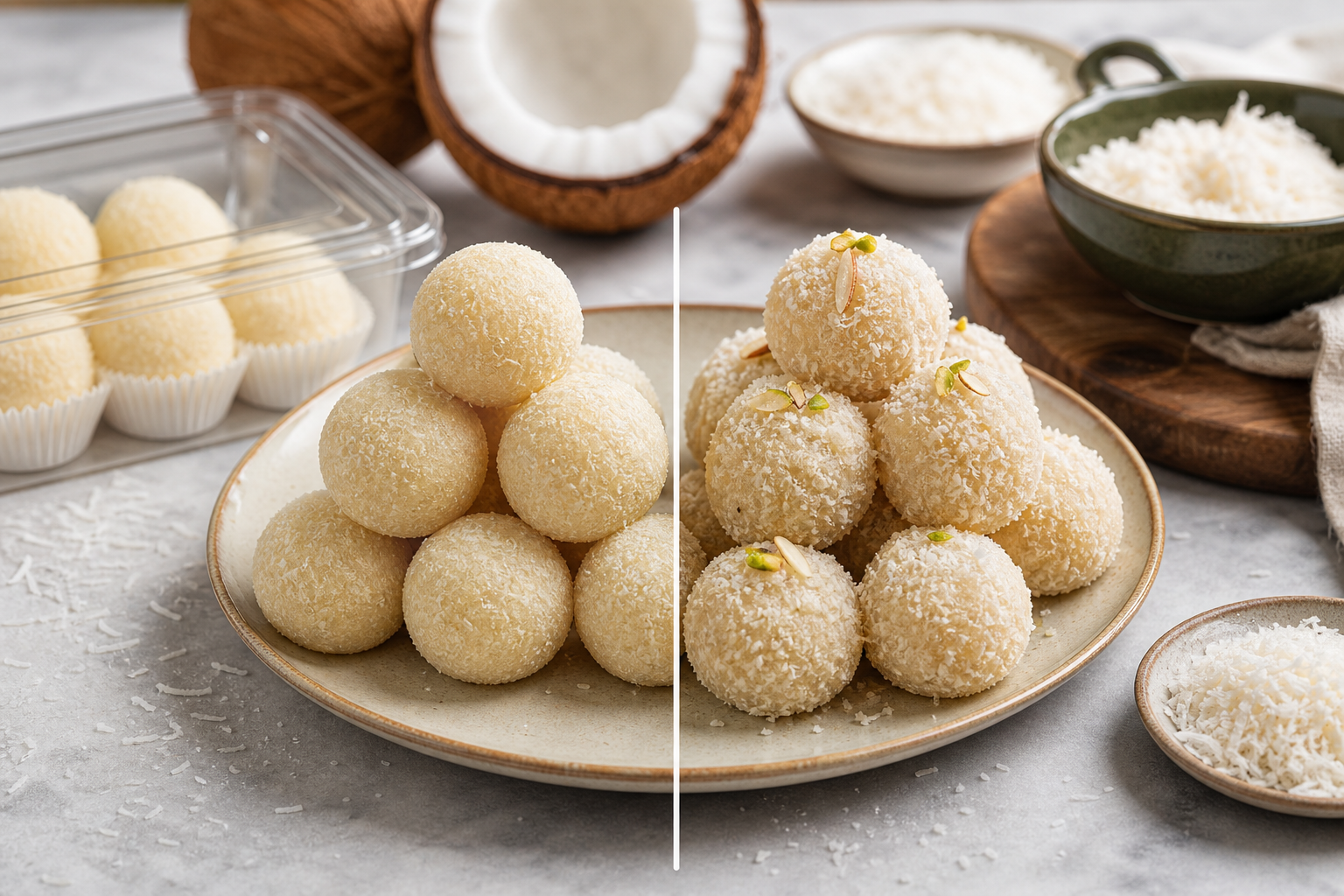
Coconut Laddoo compared: store-bought vs homemade
Quick takeaway: when to buy and when to make
If you are wondering how to choose Coconut Laddoo, start with one simple question: do you value convenience and consistent presentation, or do you want control over sugar, fat and coconut flavour? Buy ready-made when you need a gift-ready product, consistent texture, or minimal prep. Make laddoo at home when you want to control ingredients, test dietary swaps, or maximise fresh coconut flavour.
- Time: store-bought saves hours; homemade takes 15 to 45 minutes plus prep.
- Cost: small homemade batches can be cheaper if you already have ingredients; online orders add shipping and minimums.
- Consistency: commercial products are predictable; homemade outcomes vary by coconut form and binder.
- Customisability: homemade gives full control over binder, sweetener and fats.
How coconut form changes laddoo texture: desiccated, fresh, flakes and shredded
The coconut format is one of the single biggest factors that decides whether laddoo will be soft and cohesive, slightly chewy, or grainy. Here is how the usual forms behave when combined with common binders like condensed milk, ghee or jaggery.
Desiccated coconut: why it gives consistent results
Desiccated coconut is dried and milled into a regular particle size, which reduces moisture variation and helps the binder coat each particle evenly. That makes it ideal for no-cook or quick laddoo recipes where the binder does the work of sticking the mixture together. Because desiccated coconut has low free water, it will not make laddoo soggy and it holds shape well. For guidance on using desiccated coconut in instant laddoo, see a practical how-to note from recipe guides and industry checklists.
Fresh coconut: flavour and the brief prep it needs
Fresh grated coconut gives a bright, immediate coconut flavour that many people prefer. Raw grated flesh carries a faint raw scent and higher moisture, so recipes often recommend a short low-heat sauté or brief drying to remove excess water before binding. If you choose fresh, select heavy, firm nuts and test a small portion to ensure the mixture binds rather than becoming watery. Practical tips for selecting good whole coconuts include shaking to hear the water and comparing weights among similar-sized nuts.
Flakes and shredded: when to choose them
Flakes and shredded coconut come in a range of thicknesses. Large flakes create a chewier laddoo and are often used as a decorative coating. Fine shreds behave more like desiccated coconut and will bind more readily. Also watch whether the product is sweetened, as added sugar in some flakes changes moisture and mouthfeel.
Checklist to judge store-bought Coconut Laddoo
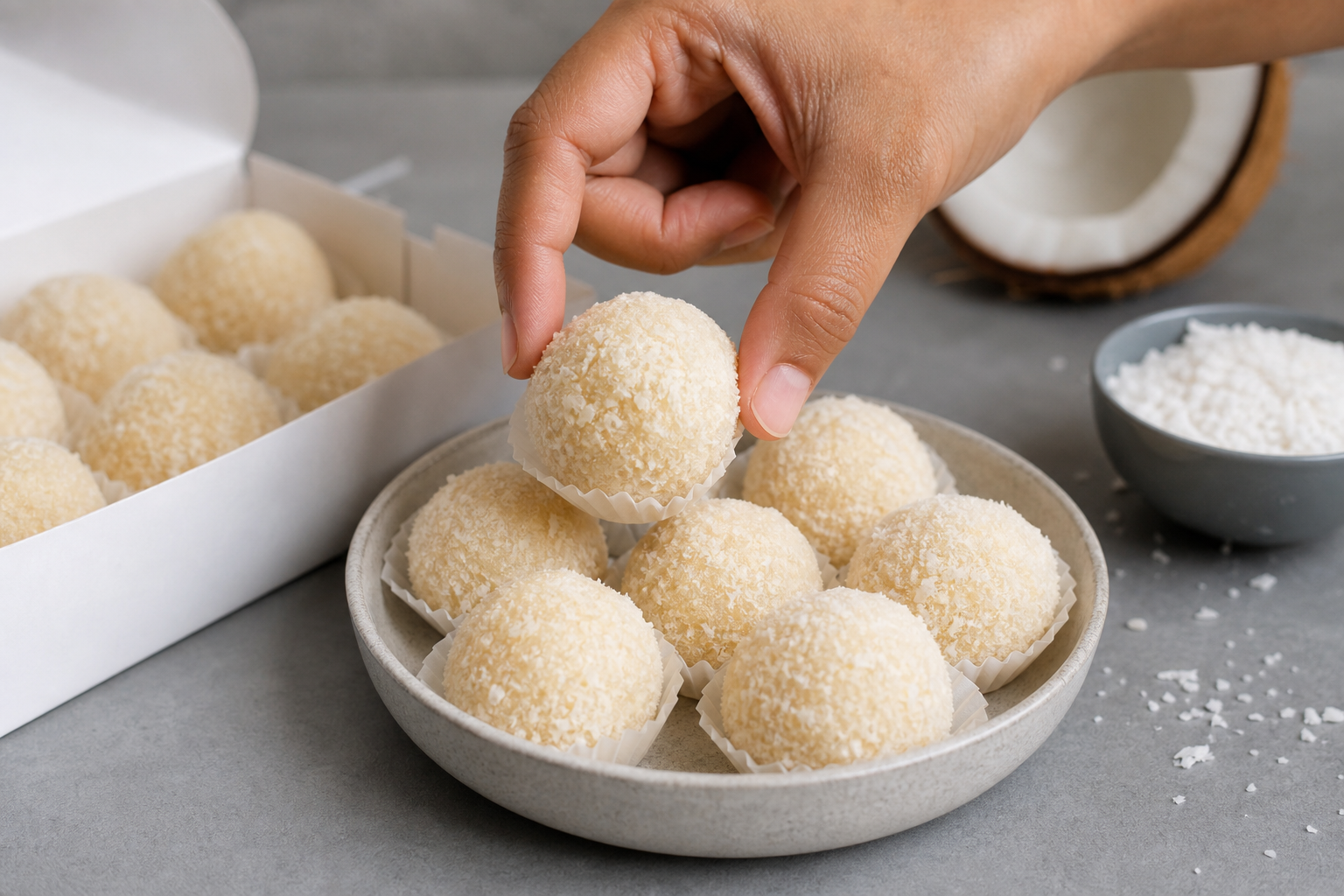
When evaluating pre-made laddoo online or in person, use this practical checklist. Each item includes what to expect and what to ask the seller if the label is unclear.
Texture and mouthfeel
- Good sign: uniformly formed balls with an even surface and no visible oil separation.
- Warning sign: dry, crumbly or very grainy texture, which may mean low binder or stale coconut.
- If buying sight unseen, request close-up photos or a short video showing the interior when a laddoo is split.
Binder and sweetness: what to expect on labels
Common binders are sweetened condensed milk, ghee or jaggery syrup. Condensed milk produces a soft, creamy, sweeter laddoo but introduces dairy allergens. Ghee adds richness and a firmer mouthfeel. Jaggery yields a deeper, caramel-like flavour and less overt sweetness. If the ingredient line uses vague phrases such as "sweetener" or "natural flavours" without naming the binder, ask the seller for a full ingredient breakdown.
Freshness signals and packaging checks
- Good sign: sealed inner wrap, clear pack or best-before date, an allergen panel, and professional labelling.
- Ask the seller: packing date, storage recommendations and whether they ship in insulated packaging during warm weather.
Homemade advantages: which coconut to choose and simple swaps
Homemade laddoo lets you match coconut form to your goal. For the quickest, most consistent no-cook laddoo, use fine desiccated coconut. For the strongest fresh coconut flavour, use freshly grated flesh that has been lightly cooked or dried. When using whole coconuts, pick those that feel heavy for their size and have intact "eyes". Practical selection and preparation advice for fresh and desiccated coconut appears in recipe resources and supplier notes.
Quick substitutions and dietary swaps
- Swap jaggery for condensed milk to reduce refined sugar and add a molasses-like depth, noting binding changes.
- Use coconut oil instead of ghee for a plant-based option, but expect a slightly different mouthfeel because melting points differ.
- Try a plant-based condensed milk alternative for lactose-free laddoo, and test a small batch to confirm sweetness and binding.
When making ingredient swaps, always prepare a small test batch to confirm texture and flavour before scaling up for gifting or events. For step-by-step techniques that explain brief cooking steps and ratios, a tested no-cook recipe resource is useful when you want precise measures.
Label red flags and how to resolve buyer objections
Common buyer concerns include freshness, dairy allergens and ingredient transparency. Here are specific label red flags and the practical responses you should expect from a responsible seller.
- Red flag: "coconut flavour" or "coconut essence" listed without coconut or coconut-derived ingredients. Response: request the ingredient list and a clarification on what provides the coconut taste.
- Red flag: missing allergen declaration when dairy ingredients are likely. Response: request confirmation of dairy content or a certificate of analysis for commercial suppliers.
- Red flag: vague "natural ingredients" with no packing date or best-before date. Response: ask for a packing date and storage instructions before buying.
Storage, serving and gifting notes
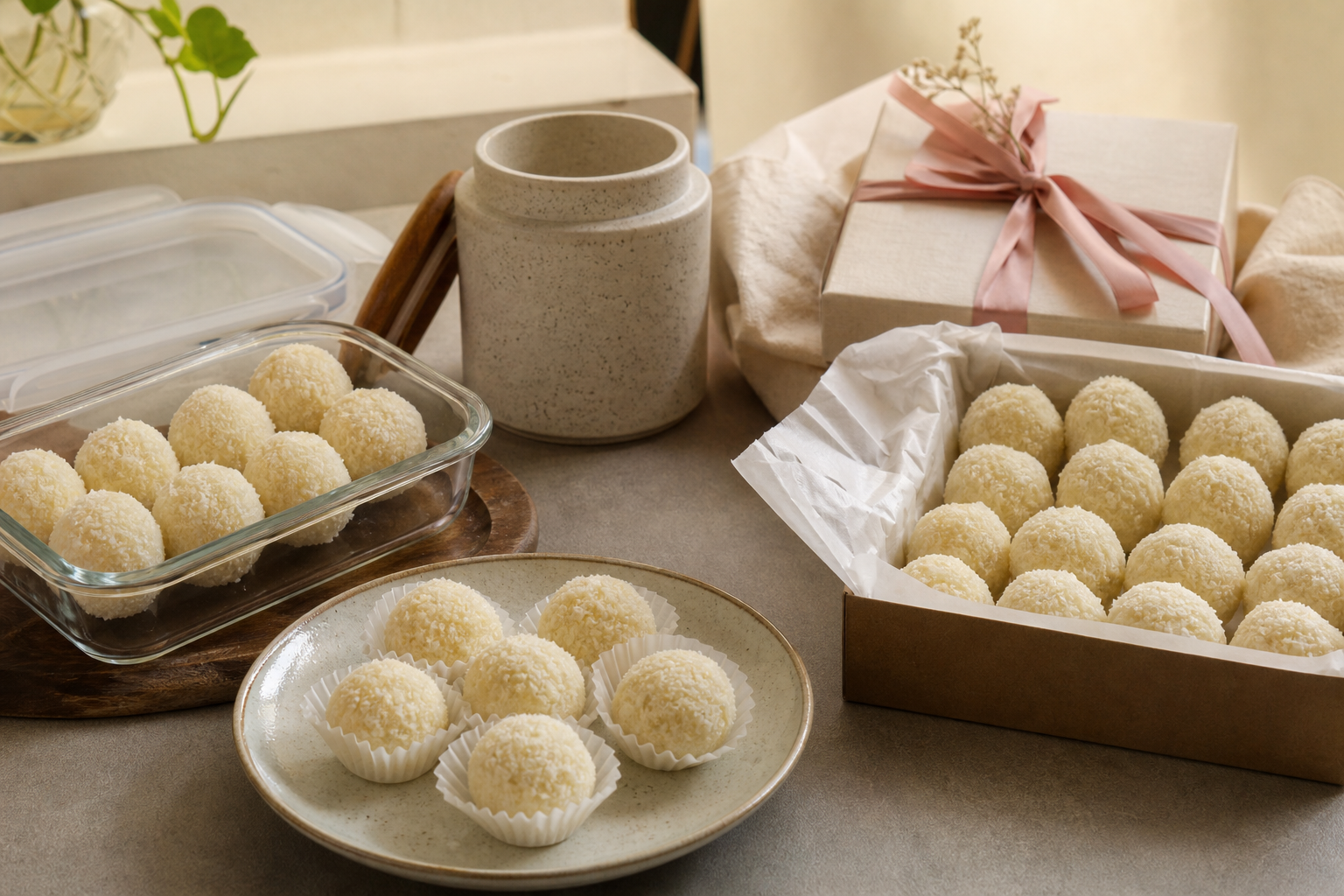
Do not assume a universal shelf life. Follow seller instructions and check the product label for refrigeration guidance. For gifting and shipping, inner sealed wraps and sturdy outer boxes help prevent drying and crushing. If you are shipping laddoo across seasons, consider insulated packaging or cold packs only when the product label recommends refrigeration after delivery. When serving, bring refrigerated laddoo to room temperature for 15 to 30 minutes to soften slightly before presenting.
Where to buy authentic Coconut Laddoo in Canada
If you prefer buying from a Canada-based shop with a curated selection of Indian sweets, Tadkasnacks lists coconut sweets and related items in its catalog. For example, see the Tadkasnacks coconut peda mathi product page for a coconut-based sweet option and check the main store for current inventory. Tadkasnacks advertises offers that reduce total cost, such as 15% off first orders and free shipping on purchases over $50; review the product page for the latest details before ordering.
For broader context on technique and ingredient selection, independent recipe guides and industry notes on desiccated coconut quality can help you compare texture expectations and production standards. When comparing suppliers, apply the same checklist above: ingredient transparency, allergen labelling, packing or best-before dates, and sealed packaging.
Editorial disclosure: this article provides buying criteria and comparison points rather than ranking retailers. If you want to compare an independent write-up of coconut laddoo technique, refer to specialty sweets blogs and recipe resources that explain both no-cook and cooked versions.
For another point of comparison on product presentation and ingredients, review this coconut ladoo reference, then confirm the current label and allergen details with the seller.
Final decision checklist and next steps
Use this short checklist to decide now:
- Determine desired texture: soft and uniform (fine desiccated) or bright and coconut-forward (fresh grated and briefly cooked).
- Pick binder preference: condensed milk for creaminess, ghee for richness, jaggery for deeper flavour.
- Confirm allergens on the label if you have dairy or nut concerns.
- Check packaging and freshness signals: sealed inner wrap, clear pack or best-before date, and full ingredient list.
- When buying in Canada, weigh product price against shipping and promotions such as first-order discounts or free shipping thresholds.
Frequently asked questions
Is desiccated coconut better for making Coconut Laddoo than fresh coconut?
For quick, no-cook laddoo, desiccated coconut is usually the better choice because its low and consistent moisture makes binding predictable. Fresh coconut gives stronger flavour but needs a short drying or light cooking step to remove raw notes and excess water. Both approaches are valid depending on your priorities for flavour and convenience.
How can I tell a pre-made Coconut Laddoo is fresh when buying online or in-store?
Freshness signs include a sealed inner wrap, a visible pack or best-before date, a cohesive interior texture with no oil separation, and a pleasant coconut aroma when opened. If buying online, ask the seller for packing dates or recent photos if the product page does not show them.
Does Coconut Laddoo usually contain dairy and how should I check allergen information?
Many commercial laddoo use sweetened condensed milk or ghee, both of which introduce dairy allergens. Always read the ingredient list and allergen statement on the product label, and contact the seller for clarification if information is missing or unclear.
Can I substitute jaggery or a plant-based condensed milk when making laddoo at home?
Yes. Jaggery adds a deeper, less overtly sweet flavour but may change binding behaviour slightly. Plant-based condensed milk or coconut oil can replace dairy ingredients for a lactose-free laddoo, but test a small batch because sweetness and texture will vary.
Where can I buy authentic Coconut Laddoo in Canada and are there shipping discounts available?
You can browse Canada-focused shops that specialise in Indian sweets and snacks, including Tadkasnacks, which lists coconut sweets in its catalog and advertises a 15% first-order discount and free shipping on orders above $50. Compare ingredient transparency and packaging before you order to ensure the product meets your freshness and allergen expectations.
Tadkasnacks coconut peda mathi — browse coconut sweets on the Tadkasnacks site and sign up for the email list to receive early access to new arrivals and exclusive offers.
Further reading and quality resources cited in this article include practical how-to notes on laddoo techniques and quality checklists for desiccated coconut production and selection. For recipe technique, see an easy method to make coconut laddoo and supplier advice on choosing desiccated coconut.
Trusted references used while preparing this comparison include an easy coconut laddoo how-to, guidance on desiccated coconut selection, and expert notes on coconut formats. For technique details consult practical recipe resources such as the coconut laddoo how-to and specialist guidance on desiccated coconut quality.
Related links: How to Make Coconut Ladoo, Choosing coconut forms, and How to choose high quality desiccated coconut. For supplier buying guidance see a practical buying checklist such as the Alibaba coconut buying guide.
Visit Tadkasnacks to view current coconut sweets and sign up for 15% off your first order and free shipping on purchases over $50.
0 comments